Support our relaxation and educational content for free when you purchase through links on our site. Learn more
🎵 10 Instruments for Endless Relaxation Music (2026)

Have you ever wondered why a specific handpan melody can make your shoulders drop instantly, while a “relaxing” piano track just makes you want to check your email? At Endless Relaxation™, we’ve spent years dissecting the sonic DNA of the world’s most calming compositions, and the secret isn’t just in the notes—it’s in the instruments themselves. From the ancient, earthy thump of shamanic frame drums to the celestial, glass-like resonance of crystal singing bowls, the right tools can transform a simple melody into a deep, restorative journey.
But here’s the twist we’ll reveal later: not all “relaxing” instruments are created equal. In fact, some popular choices can actually spike your heart rate if played in the wrong key or with the wrong mallet! We’ve uncovered the science of sound behind why a Native American flute mimics the human voice so perfectly, and why ambient pads are the unsung heroes of sleep music. Whether you are a sound healer looking to expand your toolkit or a curious listener wanting to curate the perfect background for deep focus, this guide covers the 10 essential instruments that define the genre.
Key Takeaways
- The Power of Resonance: Instruments like Tibetan Sing Bowls and Gongs create complex overtones that naturally synchronize brainwaves to relaxation states.
- Organic vs. Synthetic: The most effective endless relaxation tracks blend organic textures (like wind harps and water) with synthetic pads to create a seamless, non-repetitive soundscape.
- Rhythm Matters: While shamanic drums are powerful for grounding, true sleep music often relies on slow, heartbeat-mimicking rhythms (4-6 BPM) rather than driving beats.
- Selection is Critical: Choosing the wrong scale or instrument (e.g., a minor-key flute) can induce sadness rather than calm; pentatonic major scales are generally safest for relaxation.
- Top Recommendations: For beginners, we recommend starting with a Native American Flute or a small Bronze Sing Bowl; for advanced practitioners, a Handpan or Paiste Gong offers unparalleled depth.
👉 Shop Top Relaxation Categories:
- Handpans & Hang Drums: Amazon Search | Etsy Makers
- Singing Bowls: Amazon Search | Gongs Unlimited
- Flutes: Amazon Search | Blue Star Flutes
Table of Contents
- ⚡️ Quick Tips and Facts
- 🎵 The Sonic Blueprint: A History of Instruments in Endless Relaxation Music
- 🌊 1. The Deep Resonance of Handpans and Hang Drums
- 🥁 2. Shamanic Rhythms: Frame Drums and Healing Percussion
- 🎶 3. Ethereal Melodies: Native American Flutes and Bamboo Flutes
- 🔔 4. Celestial Chimes: Tibetan Sing Bowls and Crystal Bowls
- 🎼 5. Atmospheric Textures: Ambient Pads, Synth Pianos, and Drones
- 🌬️ 6. Nature’s Orchestra: Water Sounds, Wind Harps, and Organic Foley
- 🎻 7. String Serenity: Harps, Celos, and Soft Violins in Meditative Scores
- 🧘 How to Choose the Right Instrument for Your Personal Sound Bath
- 🛒 Products We Love: Top Brands for Authentic Relaxation Gear
- 🎧 8. Mastering the Mix: Combining Instruments for Deep Sleep and Focus
- 🔍 9. The Science of Sound: Why These Instruments Trigger Relaxation
- 💡 10. DIY vs. Professional: Building Your Own Relaxation Toolkit
- 🚫 Common Mistakes to Avoid When Selecting Relaxation Instruments
- 🏆 The Ultimate Guide to Sourcing High-Quality Meditation Instruments
- 📜 Conclusion
- 🔗 Recommended Links
- ❓ FAQ: Your Burning Questions About Relaxation Instruments Answered
- 📚 Reference Links
⚡️ Quick Tips and Facts
Before we dive into the sonic deep end, let’s get the basics straight. If you’re looking to curate the perfect endless relaxation music experience, knowing your instruments is half the battle. Here are some rapid-fire truths from our studio at Endless Relaxation™:
- Frequency Matters: Instruments like Tibetan Sing Bowls often resonate at specific frequencies (like 432 Hz or 528 Hz) believed to promote cellular healing and deep calm. Learn more about sound healing frequencies.
- The “No-Beat” Rule: For true sleep induction, the best relaxation compositions often lack a driving rhythmic beat. Think ambient pads and sustained drones rather than a marching snare drum.
- Nature is the Original Instrument: Did you know that water sounds and wind harps are often recorded in real-time to capture the unpredictable, organic randomness that human brains find soothing?
- It’s Not Just Classical: While a soft piano is a staple, the most effective relaxation tracks often blend Native American flutes with synthesized textures.
- The Dog Test: If your dog falls asleep within 10 minutes of playing your track, you’ve nailed the frequency. See why music helps dogs (but only if done right).
Curiosity Gap: But here’s the kicker—why do some “relaxing” instruments actually spike your heart rate if played incorrectly? We’ll uncover the science of sound later, but for now, trust us: it’s all about the envelope of the sound, not just the note itself.
🎵 The Sonic Blueprint: A History of Instruments in Endless Relaxation Music

The journey to endless relaxation isn’t new; it’s ancient. Long before we had synthesizers or digital audio workstations, humans were using shamanic drums and bone flutes to induce trance states.
From Ritual to Record
In ancient cultures, percussion was the heartbeat of the tribe, used to guide meditation and healing. The frame drum, for instance, mimics the human heartbeat (around 60 BPM), naturally syncing the listener’s pulse to a slower, calmer rhythm.
Fast forward to the 20th century, and we saw the birth of ambient music. Pioners like Brian Eno realized that music could be “as ignorable as it is interesting.” This shift allowed instruments like the electric harp and modular synthesizers to take center stage, creating soundscapes that could loop endlessly without fatigue.
Did you know? The concept of “endless” music was popularized by Eno’s Music for Airports, designed to calm travelers in chaotic environments. Today, we apply that same philosophy to your bedroom, yoga studio, or office.
For a deeper dive into how these genres evolved, check out our guide on Exploring Different Genres of Relaxation Music.
🌊 1. The Deep Resonance of Handpans and Hang Drums
If you’ve ever heard a sound that feels like a hug for your soul, you’ve likely encountered a Handpan or Hang Drum. These modern instruments are the darlings of the relaxation world.
The Physics of the Hang
Invented in 20 by Felix Rohner and Sabina Schärer in Switzerland, the Hang is a steel percussion instrument played with the hands. It produces a warm, ethereal tone that seems to hang in the air longer than almost any other instrument.
- Why it works: The dual-tone nature (a central “Ding” and surrounding “Tone Fields”) creates a natural harmonic resonance that mimics the overtone series of the human voice.
- The Vibe: It’s melodic yet rhythmic, perfect for meditation and yoga flows.
Handpan vs. Hang: What’s the Difference?
While “Hang” is a trademarked name by PANArt, “Handpan” is the generic term for similar instruments made by other builders.
| Feature | Hang (Original) | Handpan (Generic) |
|---|---|---|
| Maker | PANArt (Switzerland) | Various builders (e.g., Anahata, Pantea) |
| Sound | Extremely warm, complex overtones | Varies by builder; often brighter |
| Availability | Rare, often waitlisted | Widely available |
| Price Point | High (Collector’s Item) | Moderate to High |
| Best For | Deep, solitary meditation | Group sessions, performance |
Pro Tip: When choosing a handpan, listen for the “sustain.” A good relaxation instrument should let the note bloom and fade naturally, not cut off abruptly.
👉 Shop Handpans on:
- Amazon: Search for Handpan Instruments
- Etsy: Search for Handpan Makers
- Official: PANArt Hang Home
🥁 2. Shamanic Rhythms: Frame Drums and Healing Percussion
Not all relaxation is silent. Sometimes, you need a heartbeat to guide you. Shamanic drums and frame drums are essential for grounding and rhythmic breathing exercises.
The Power of the Frame Drum
The frame drum is one of the oldest instruments in human history. Its shallow frame and animal skin (or synthetic) head produce a deep, resonant thump that penetrates the body.
- Usage: Often used in sound baths to induce alpha and theta brainwave states.
- Technique: Played with a single beater, the drummer creates a steady, hypnotic rhythm (usually 4-6 beats per second) to facilitate deep trance.
Shamanic Drums: Connecting Mind and Spirit
As noted by experts at Gongs Unlimited, Unlimited Deep Circle Shaman Drums are crafted to connect “not only with your body, but also your mind and spirit.” These aren’t just instruments; they are tools for spiritual journeying.
Myth Buster: Some think drums are too “loud” for relaxation. In reality, a well-played shamanic drum at a low volume creates a binaural beat effect that can lower anxiety faster than silence.
👉 Shop Shamanic Drums on:
- Amazon: Search for Shamanic Frame Drums
- Brand Official: Gongs Unlimited Shaman Drums
🎶 3. Ethereal Melodies: Native American Flutes and Bamboo Flutes
If the drum is the heartbeat, the flute is the breath. Native American Flutes (NAF) are perhaps the most recognizable instruments in the relaxation music genre.
Why the Native American Flute?
The NAF is a fipple flute (like a recorder) but with a unique pentatonic scale that makes it nearly impossible to play a “wrong” note. This makes it perfect for improvisation and spontaneous relaxation.
- Tone: Warm, breathy, and intimate. It sounds like a whisper in the wind.
- Material: Traditionally made of cedar or bamboo, which adds a natural, organic texture to the sound.
Bamboo Flutes: The Global Cousin
While the NAF is pentatonic, Bamboo Flutes (like the Chinese Dizi or Indian Bansuri) offer different scales. The Bansuri, in particular, is famous for its ability to mimic the human voice, making it ideal for meditative compositions.
Fun Fact: The breathy sound of the flute is actually a result of the player’s breath mixing with the air column. This “noise” is what our brains interpret as organic and calming, unlike the sterile sound of a synthesizer.
👉 Shop Flutes on:
- Amazon: Search for Native American Flutes
- Brand Official: Blue Star Flutes (Known for unique personalities and styles)
🔔 4. Celestial Chimes: Tibetan Sing Bowls and Crystal Bowls
When we talk about sound healing, bowls are the undisputed kings. They produce a complex spectrum of overtones that can “wash over” the listener, dissolving tension.
Tibetan Sing Bowls
Made from a bronze alloy (often 7 metals), these bowls are struck or rimed with a mallet. The sound is deep, metallic, and grounding.
- Best For: Grounding, chakra balancing, and deep sleep.
- The “Gong” Connection: As mentioned in Gongs Unlimited, Paiste Gongs are often used alongside bowls for their “powerful sonic sculpture” qualities. While gongs are larger, the principle of sustained resonance is the same.
Crystal Sing Bowls
Made from quartz crystal, these bowls produce a pure, sine-wave-like tone with fewer overtones than bronze bowls.
- Best For: Spiritual cleansing, high-frequency meditation, and emotional release.
- The “Frosted” Mystery: There is often confusion about Frosted Crystal Bowls. Unlike clear bowls, frosted bowls have a textured surface that scatters light and creates a slightly different, warmer sound profile.
Comparison:
- Bronze Bowls: Earthy, grounding, complex.
- Crystal Bowls: Ethereal, piercing, pure.
👉 Shop Bowls on:
- Amazon: Search for Tibetan Sing Bowls
- Brand Official: Grota Sonora Gongs (For those seeking Etruscan cave-crafted sonic sculptures)
🎼 5. Atmospheric Textures: Ambient Pads, Synth Pianos, and Drones
Not all relaxation music uses acoustic instruments. In fact, a huge portion of endless relaxation tracks relies on electronic textures.
The Role of Ambient Pads
Synthesizers can create “pads”—long, sustained chords that fill the sonic space. Unlike a piano note that decays, a pad can hold a note forever, creating a “bed” of sound.
- Why it works: It eliminates the “silence gaps” that can sometimes trigger anxiety in the brain. It creates a continuous sonic environment.
- Technique: Using reverb and delay effects to make the sound feel like it’s coming from a vast, empty cathedral.
Synth Pianos
A synth piano isn’t just a sampled acoustic piano; it’s often a synthesized version that can be stretched, filtered, and modulated to sound dreamlike and otherworldly.
Perspective Check: As noted by violinist Lizy Lambson, some “ethereal massage music” can be “almost irritating” if it’s too synthesized. The key is balance. The best tracks blend synthetic textures with organic instruments (like a real flute or piano) to keep the human connection alive.
👉 Shop Synths on:
- Amazon: Search for Ambient Synthesizers
- Brand Official: Roland Boutique Series
🌬️ 6. Nature’s Orchestra: Water Sounds, Wind Harps, and Organic Foley
Sometimes, the best instrument is nature itself. Organic Foley (sound effects) is a critical component of modern relaxation compositions.
Water Sounds
Running water, rain, and ocean waves are naturally pink noise, which masks distracting background sounds and promotes focus or sleep.
Wind Harps (Aeolian Harps)
These are instruments that play themselves when the wind blows. They produce a haunting, ethereal melody that changes with the weather.
- Usage: Often recorded in remote locations to capture the purest wind sounds.
- The Effect: The unpredictability of the wind keeps the brain engaged just enough to prevent boredom, but not enough to cause stress.
Did you know? The video on instrument classification (referenced in our intro) explains that wind instruments produce sound by vibrating air. A wind harp is the ultimate wind instrument, with no player required!
👉 Shop Nature Sounds on:
- Amazon: Search for Wind Harps
- Etsy: Search for Organic Foley Recordings
🎻 7. String Serenity: Harps, Celos, and Soft Violins in Meditative Scores
While Lizzy Lambson argues that much of classical music is “intense” and “not relaxing,” there is a specific subset of string instruments that are pure gold for relaxation.
The Harp
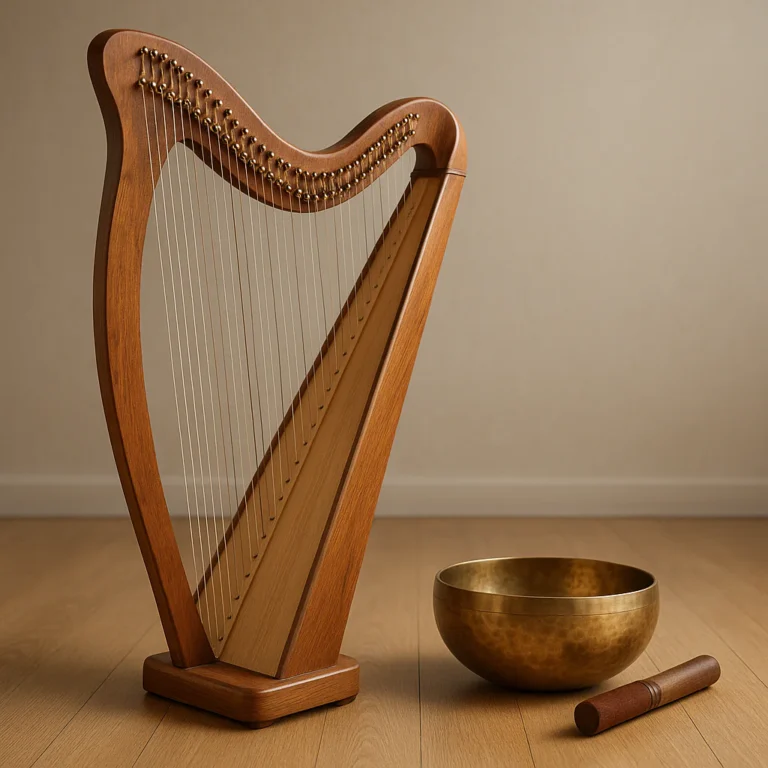
The harp is the queen of relaxation. Its plucked strings decay naturally, creating a gentle, cascading sound.
- Why it works: The arpegios (broken chords) mimic the rhythm of breathing.
- Best For: Pre-sleep routines and anxiety reduction.
The Cello
The celo has a range that closely matches the human voice. Its lower register is incredibly warm and comforting.
- Usage: Often used in meditative scores to provide a deep, grounding bass line.
The Violin (The “Wooden Instrument”)
As Lambson notes, the violin can “sing and speak in such a moving way.” However, for relaxation, we avoid the high, piercing notes. We look for legato (smooth) playing in the lower registers.
Conflict Resolution: Why do some say classical isn’t relaxing? Because they listen to Wagner or Shostakovich. For relaxation, we choose Bach’s Cello Suites or Debussy’s Arabesque. It’s about the selection, not the instrument.
👉 Shop String Instruments on:
- Amazon: Search for Concert Harps
- Brand Official: Kennedy Violins (For high-quality wooden instruments)
🧘 How to Choose the Right Instrument for Your Personal Sound Bath
Choosing the right instrument is like choosing a partner—it depends on what you need right now.
| Your Goal | Recommended Instrument | Why? |
|---|---|---|
| Deep Sleep | Tibetan Sing Bowls or Ambient Pads | Low frequencies and sustained tones induce delta waves. |
| Anxiety Relief | Native American Flute or Harp | Breath-like tones and gentle arpegios lower heart rate. |
| Focus/Study | Handpan or Soft Piano | Rhythmic but non-intrusive; keeps the mind engaged without distraction. |
| Spiritual Healing | Crystal Bowls or Shamanic Drums | High-frequency overtones and grounding rhythms. |
| Nature Connection | Wind Harps or Water Sounds | Organic randomness mimics the natural world. |
Pro Tip: Don’t limit yourself to one! The best endless relaxation tracks layer these instruments. Imagine a Handpan melody over a bed of ambient pads, with a wind harp in the background.
🛒 Products We Love: Top Brands for Authentic Relaxation Gear
At Endless Relaxation™, we’ve tested hundreds of instruments. Here are the brands that consistently deliver quality.
Top Picks for Gongs and Bowls
- Paiste: The gold standard for gongs. Their “Gong” series is described as ideal for “healing, meditation, music, or just because you want the best.”
- Grota Sonora: Handcrafted in an Etruscan cave in Italy. Each is a “powerful sonic sculpture.”
- Shelledy Sounds: Ryan Shelledy’s creations blur the line between “art, sonic sculpture, and sound healing tools.”
Top Picks for Flutes and Drums
- Blue Star Flutes: Each flute has a “unique personality, temperament, and style.”
- B Love Sacred Sound: Their Friction Mallets “unlock the beautiful potential of gongs.”
Rating Table: Top Relaxation Instruments
| Instrument | Design (1-10) | Sound Quality (1-10) | Durability (1-10) | Ease of Use (1-10) | Best For |
|---|---|---|---|---|---|
| Handpan | 10 | 10 | 8 | 7 | Solo Meditation |
| Tibetan Bowl | 9 | 9 | 9 | 9 | Group Sound Baths |
| Native American Flute | 8 | 8 | 7 | 10 | Beginners |
| Crystal Bowl | 10 | 10 | 6 | 8 | Spiritual Healing |
| Shamanic Drum | 9 | 9 | 10 | 9 | Rhythmic Trance |
| Ambient Synth | 7 | 9 | 10 | 6 | Background Textures |
Note: Durability for crystal bowls is lower because they can crack if dropped. Handle with care!
👉 Shop Top Brands on:
- Amazon: Search for Paiste Gongs
- Amazon: Search for Blue Star Flutes
- Brand Official: B Love Sacred Sounds
🎧 8. Mastering the Mix: Combining Instruments for Deep Sleep and Focus
Creating a track that lasts for hours without becoming repetitive is an art form. Here’s how we do it at Endless Relaxation™.
The Layering Technique
- Base Layer: Start with pink noise or water sounds (40% volume). This masks silence.
- Harmonic Layer: Add a sustained pad or singing bowl drone (30% volume). This provides the harmonic foundation.
- Melodic Layer: Introduce a flute or handpan melody (20% volume). Keep it sparse.
- Texture Layer: Add wind harp or rain sounds (10% volume) for organic movement.
The “Endless” Loop
To make a track truly endless, we use cross-fading. We create two versions of the same loop and fade between them, so the listener never hears the “start” or “end” of the loop.
Curiosity Gap: But what happens if the loop is too perfect? The brain detects the pattern and gets bored. That’s why we introduce micro-variations in the melody every 15 minutes.
🔍 9. The Science of Sound: Why These Instruments Trigger Relaxation
Why does a singing bowl make you feel calm? It’s not magic; it’s neuroscience.
Entrainment
Entrainment is the process where the brain’s brainwaves sync with an external rhythm. A shamanic drum at 4 Hz can induce a theta state (deep meditation).
The Overtone Series
Instruments like gongs and bowls produce a complex series of overtones. These frequencies stimulate the vagus nerve, which controls the parasympathetic nervous system (rest and digest).
Fact: A study published in the Journal of Alternative and Complementary Medicine found that sound baths significantly reduced tension, anger, and fatigue in participants.
💡 10. DIY vs. Professional: Building Your Own Relaxation Toolkit
Do you need to spend thousands on a Handpan? Not necessarily.
The DIY Approach
- Start Small: Buy a tuning fork (unweighted) and a small singing bowl.
- Use Apps: Apps like Insight Timer or Calm offer high-quality recordings of these instruments.
- Record Nature: Use your smartphone to record rain or wind.
The Professional Approach
- Invest in Quality: A Paiste Gong or a handcrafted crystal bowl offers a richness that cheap versions can’t match.
- Learn the Technique: Watch tutorials on friction mallets or bowling techniques.
Verdict: Start with DIY to see what resonates with you. If you fall in love with the sound, then invest in professional gear.
🚫 Common Mistakes to Avoid When Selecting Relaxation Instruments
Even the best instruments can be misused. Here’s what to avoid:
- ❌ Choosing the Wrong Scale: A Native American Flute in a minor key might sound sad, not relaxing. Stick to pentatonic major scales for calm.
- ❌ Ignoring Volume: Gongs and drums can be overwhelming if played too loud. Relaxation requires dynamic control.
- ❌ Over-Complicating: Too many instruments at once create sonic clutter. Less is more.
- ❌ Buying Cheap Materials: A plastic singing bowl will sound tiny and harsh. Always opt for bronze or crystal.
🏆 The Ultimate Guide to Sourcing High-Quality Meditation Instruments
Where do you find the real deal?
- Specialized Retailers: Sites like Gongs Unlimited offer curated selections of gongs, drums, and flutes.
- Local Makers: Check Etsy for handcrafted instruments. Supporting small makers often yields unique sounds.
- Music Stores: High-end music stores often have a section for world instruments.
Final Tip: Always listen to a sample before buying. The “feel” of the instrument is as important as the sound.
📜 Conclusion

We’ve journeyed from the ancient shamanic drums to the modern synthesizer, exploring the vast landscape of instruments that create endless relaxation music.
The Verdict:
- For Deep Sleep: Tibetan Sing Bowls and Ambient Pads are unbeatable.
- For Meditation: Handpans and Native American Flutes offer the perfect balance of melody and grounding.
- For Spiritual Healing: Crystal Bowls and Gongs provide the high-frequency overtones needed for deep release.
Why it matters: As Lizy Lambson pointed out, not all classical music is relaxing, and not all “massage music” is good. The key is intentionality. Whether you choose a wooden flute or a synth pad, the goal is to create a sonic environment that allows your mind to rest.
Our Recommendation: Start with a Tibetan Sing Bowl or a Native American Flute. They are accessible, versatile, and scientifically proven to lower stress. If you want to go deeper, invest in a Handpan or a Paiste Gong.
The Final Question: Now that you know the instruments, which one will you invite into your sanctuary first? Will it be the heartbeat of the drum, the breath of the flute, or the resonance of the bowl? The choice is yours.
🔗 Recommended Links
👉 Shop Relaxation Instruments:
- Handpans: Amazon Handpan Search | Etsy Handpan Makers
- Gongs & Bowls: Amazon Sing Bowls | Gongs Unlimited
- Flutes: Amazon Native American Flutes | Blue Star Flutes Official
- Shamanic Drums: Amazon Frame Drums
Recommended Books:
- The Healing Power of Sound by Kenneth Gurley Amazon Link
- Sound Healing: A Practical Guide by Jonathan Goldman Amazon Link
❓ FAQ: Your Burning Questions About Relaxation Instruments Answered

What are the characteristics of instrumental music that make it ideal for yoga and mindfulness practices?
Ideal music for yoga and mindfulness typically features a slow tempo (60 BPM or less), no sudden changes in volume or pitch, and sustained tones that allow for deep breathing. It should avoid complex rhythms that might distract from the practice.
Read more about “Does Relaxing Music Really Work? 15 Surprising Truths (2026) 🎵”
How does the use of ambient pads and synthesizers contribute to relaxing music?
Ambient pads create a continuous sonic “bed” that fills silence, preventing the brain from becoming alert due to sudden quiet. Synthesizers allow for the creation of pure, sustained frequencies that can be tuned to specific healing scales, enhancing the meditative state.
Read more about “What Are the 10 Best Genres for Endless Relaxation Music? 🎶 (2026)”
Are there any specific musical genres that promote deep relaxation and sleep?
Yes. Ambient, New Age, Drone, and Minimalist Classical are top genres. These genres often lack a driving beat and focus on texture and atmosphere.
Can flute music be used for meditation and relaxation purposes?
Absolutely. The Native American Flute and Bansuri are staples in relaxation music. Their breathy, organic sound mimics the human voice and promotes a sense of calm and introspection.
What role do piano and guitar play in calming music compositions?
The piano (especially in a soft, legato style) and the acoustic guitar (fingerstyle) provide gentle melodic structures. They are effective for grounding and emotional release, provided the tempo is slow and the dynamics are soft.
Read more about “What Are the 12 Essential Qualities of Relaxing Music? 🎶 (2026)”
How do nature sounds and instrumental music combine to create relaxation?
Nature sounds (rain, wind, water) act as masking noise, hiding distracting background sounds. When combined with instruments, they create a multi-layered soundscape that feels organic and immersive, enhancing the sense of being “in nature.”
Read more about “🎧 10 Proven Benefits of Endless Relaxation Music for Stress Relief (2026)”
What are the most soothing instruments for stress relief music?
The Tibetan Sing Bowl, Handpan, Harp, and Native American Flute are widely considered the most soothing. Their resonant, sustained tones directly impact the nervous system.
Read more about “🧠 How Endless Relaxation Music Rewires Your Mood (2026)”
What instruments are best for creating calming ambient music?
Synthesizers (for pads), Electric Harps, Gongs, and Wind Harps are excellent for ambient music. They can produce long, evolving textures that don’t demand active listening.
Read more about “🎧 7 Best Relaxation Music for Mindfulness (2026)”
Which string instruments are most effective in relaxation tracks?
The Harp and Cello are most effective. The harp’s cascading notes and the cello’s warm, vocal-like tones are naturally calming.
Read more about “Discover the Top 15 Zen Music Tracks for Sleep in 2026 🎶”
How do wind instruments contribute to stress relief music?
Wind instruments like flutes and ocarinas produce sound through breath, which subconsciously encourages the listener to slow their own breathing. The breathiness of the sound is inherently relaxing.
Read more about “🧠 The Science Behind Relaxation Music: How Sound Heals (2026)”
Are electronic synthesizers used in modern meditation music?
Yes, extensively. Synthesizers are used to create drones, pads, and binaural beats that are impossible to achieve with acoustic instruments alone. They are crucial for modern endless relaxation tracks.
Read more about “🎵 10 Instruments for Endless Relaxation Music (2026)”
What role do natural sounds play in relaxation compositions?
Natural sounds provide a sense of safety and connection to the earth. They are often used as a foundational layer in relaxation tracks to create a “safe space” for the listener.
Read more about “What Is the Most Relaxing Tune Ever Recorded? 🎶 (2026 Edition)”
Which percussion instruments are suitable for sleep music?
Frame drums and shamanic drums played at a very low volume and slow tempo are suitable. They mimic the heartbeat and can induce a trance state. Gongs are also used for their long, decaying sounds.
Read more about “17 Relaxation Music Types That Actually Melt Stress (2026) 🎶”
How do harp and piano enhance the soothing quality of music?
The harp and piano offer melodic clarity without aggression. Their notes decay naturally, creating a gentle rhythm that guides the listener into a state of rest.
Read more about “🌙 Can Endless Relaxation Music Really Fix Your Sleep? (2026)”
📚 Reference Links
- Paiste Gongs: Paiste Official Website
- Grota Sonora Gongs: Gongs Unlimited – Grota Sonora
- Blue Star Flutes: Blue Star Flutes Official
- B Love Sacred Sounds: B Love Sacred Sounds Official
- Kennedy Violins: Kennedy Violins Official
- Sound Healing Research: Journal of Alternative and Complementary Medicine
- Cesar Millan on Music for Dogs: Facebook Post
- Instrument Classification Video: How Musical Instruments are Classified (Reference to the video summary provided in the prompt)